

No. The surgical procedure using the ROSA® Shoulder robot is similar to traditional shoulder replacement, but with a robotic assistant. It’s important to understand that the robot does not operate on its own. That means it does not move unless your surgeon prompts it to. Your surgeon is still in the operating room the entire time and is making all the decisions throughout your shoulder implant surgery.
Robotic Technology
ROSA® Shoulder for Robotic Shoulder Replacement
Overview
Understanding Robotic-Assisted Shoulder Replacement
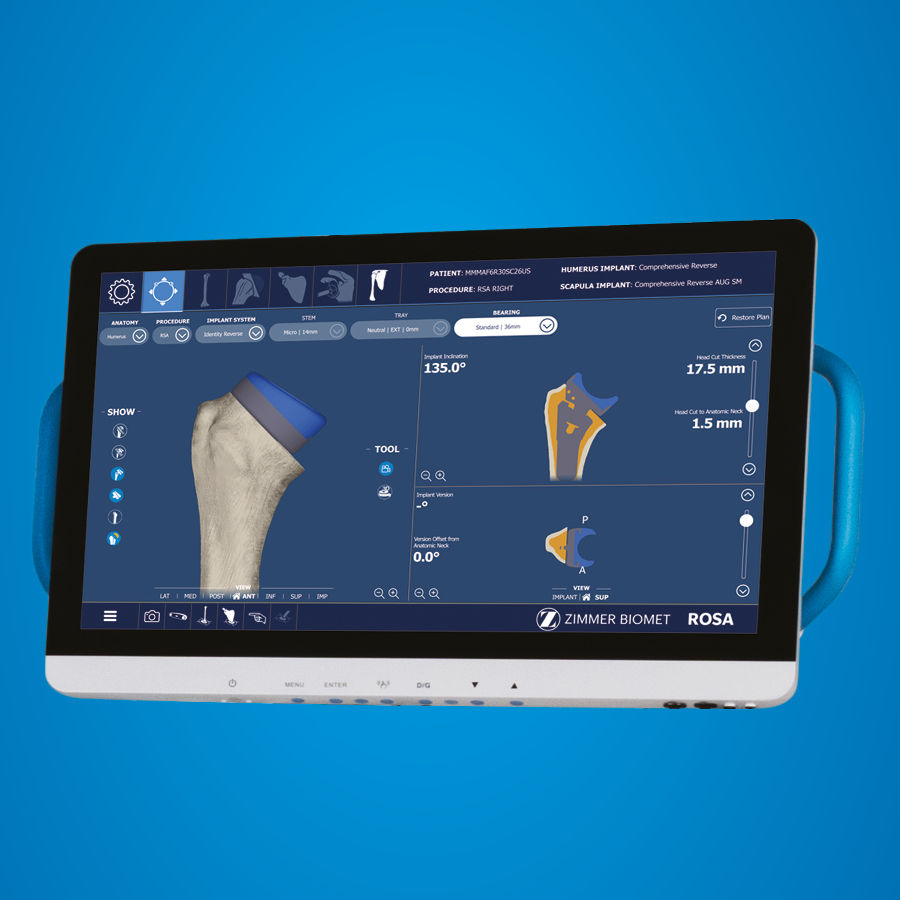
You’re unique, and so is your individual anatomy. That’s why Zimmer Biomet offers ROSA® Shoulder robotic technology. ROSA, which stands for Robotic Surgical Assistant, is designed to help your surgeon tailor the placement of your shoulder implant just for you.

When is Robotic-Assisted Surgery Used?
In situations where accuracy1 and personalization are particularly beneficial, your surgeon may recommend robotic-assisted shoulder replacement surgery.
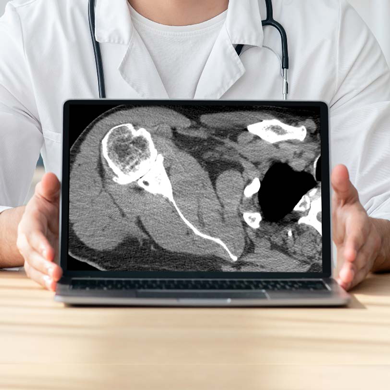
ROSA Shoulder uses data collected before and during surgery to provide your surgeon with important information about your shoulder anatomy that may affect implant fit. Using this information, your surgeon can make more informed decisions to plan and perform a personalized surgery based on your individual needs.
Resources
Click the down arrow button to download a resource for more information.
Benefits of Robotic Shoulder Replacement Surgery
Why Should You Consider a Robotic Shoulder Replacement (TSR)?
ROSA Shoulder is designed to support improved accuracy and implant positioning.1
How Does Robotic Shoulder Replacement Work?

Find a ROSA® Shoulder doctor near you:
*Showing US Surgeons only
ROSA Shoulder Frequently Asked Questions
mymobility®
Patient Care Management App
Keep informed for your recovery
Wherever you are on your orthopedic journey, mymobility has the information you need to prepare for and recover from surgery.

Personalized support
mymobility® provides personalized support throughout your shoulder replacement journey.
DIAGNOSIS AND OPTIONS
When to Discuss Shoulder Pain with Your Doctor
If you’re unsure whether or not your shoulder pain warrants a conversation with your doctor, here are a few reasons it might be time to call.
SURGERY
Robots Used in Surgery
The idea of robotic-assisted surgery can conjure up some interesting images. In this article, Dr. Ballard discusses the role of robots during surgeries like joint replacement.

References
Patients must have internet access and a text-capable device or compatible smartphone to use the mymobility application; not all features are available on all devices or in all regions, and patients should be clinically assessed as appropriate for remote care.
Camera Range of Motion Assessments require an iPhone 10 or newer or Android™ device with ARCore™.
The people in these advertisements are models and not actual patients.
Zimmer Biomet is a medical device manufacturer and does not practice medicine.
Not all patients are candidates for this product and/or procedure. Only a medical professional can determine the treatment appropriate for your specific condition. Appropriate postoperative activities and restrictions will differ from patient to patient. Results will vary due to health, weight, activity and other variables.
Talk to your surgeon about whether joint replacement is right for you and the risks of the procedure, including the risk of implant wear, infection, loosening, breakage or failure, any of which could require additional surgery. To learn more about Zimmer Biomet, obtain helpful information for patients and caregivers, or for assistance in finding a surgeon familiar with our products and surgical techniques, call toll-free at 1-800-447-5633. To find a doctor near you, click the ‘Find-a-Doc’ link.
All content herein is protected by copyright, trademarks and other intellectual property rights, as applicable, owned by or licensed to Zimmer Biomet or its affiliates unless otherwise indicated, and must not be redistributed, duplicated or disclosed, in whole or in part, without the express written consent of Zimmer Biomet.